Physical Address
304 North Cardinal St.
Dorchester Center, MA 02124
Physical Address
304 North Cardinal St.
Dorchester Center, MA 02124

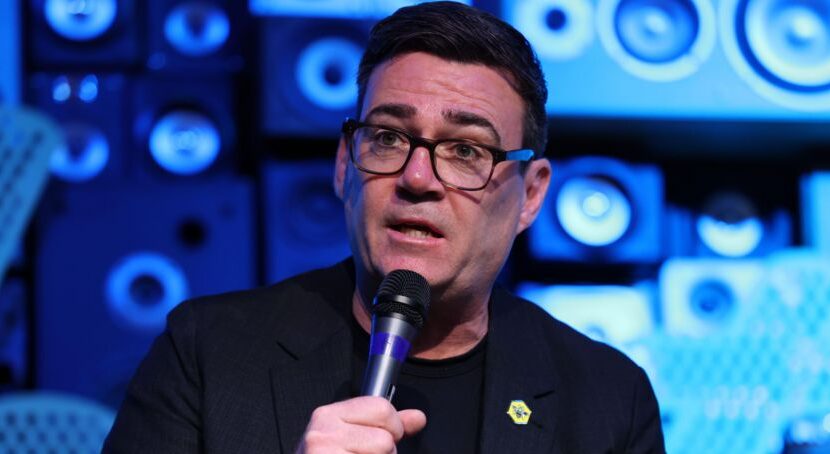
Labour's NEC clears Andy Burnham to seek selection in the Makerfield by-election, setting the stage for a potential leadership challenge against Keir Starmer.
Andy Burnham, the Greater Manchester Mayor, has been cleared by the Labour Party to seek selection as its candidate in the Makerfield by-election — a move that could set him on a direct path to Westminster and, ultimately, a challenge for the party’s leadership. Labour’s ruling National Executive Committee granted Burnham the go-ahead after having blocked his previous attempt to stand in a by-election in January, marking a significant reversal that underscores just how dramatically the political landscape within the party has shifted. The Makerfield constituency in the north-west of England became vacant on Thursday when Labour MP Josh Simons announced he would resign his seat specifically to make way for Burnham. Applications to become the party’s candidate close on Monday, May 18, with a selection meeting scheduled for May 21, and the by-election itself is widely understood to be likely taking place on June 18.
The sequence of events arrives at the end of what many inside and outside Westminster are already calling one of the most turbulent weeks in recent British political memory, as reported by BBC News. Prime Minister Sir Keir Starmer has been under extraordinary pressure to step aside following his party’s disastrous local election results, with nearly 90 Labour MPs calling on him to set a timetable for his departure. Five ministers have resigned in recent days, and the atmosphere in Westminster has been one of barely controlled chaos. Despite all of this, Starmer has continued to resist calls to stand down and is expected to fight any formal leadership challenge that emerges — whether from Burnham or from other potential contenders already circling within the parliamentary party.
Burnham’s route to a leadership contest is, by design, an indirect one. Under Labour Party rules, he cannot enter a formal leadership race unless he first holds a seat in the House of Commons, which makes the Makerfield contest a necessary gateway rather than a purely political maneuver. Should he win the seat, he would immediately be positioned to mount a challenge against Starmer, provided he could secure the backing of at least 81 Labour MPs — the threshold required to formally trigger a leadership race. Announcing his decision to apply to stand in Makerfield, Burnham said he wanted to “bring the change we have brought to Greater Manchester to the whole of the UK and make politics work properly for people,” adding that he would “not take a single vote for granted.”
The mechanics of the contest, however, are far from straightforward. Makerfield has traditionally been a safe Labour stronghold, but as detailed in coverage from BBC News UK, the constituency has been shifting noticeably toward Reform UK in recent cycles, meaning Burnham would face a genuine electoral fight rather than a coronation. Reform UK’s deputy leader Richard Tice wasted no time signaling his party’s intentions, declaring that Reform would be “throwing everything possible” to ensure a “seismic” win in the by-election. The Green Party also weighed in, pointedly noting: “We’ve learnt from our campaigning and wins in Gorton and Denton and the recent local elections, and we’ve shown we can beat Reform” — a reminder that Labour faces pressure from multiple directions in the north-west.
The optics of Simons vacating his seat were not lost on critics. Kemi Badenoch, the Conservative Party leader, delivered one of the week’s more cutting lines: “Andy Burnham wants to rock up and just be prime minister despite being out of Parliament for a decade.” That framing — of an outsider parachuting back into Westminster on the strength of personal ambition rather than parliamentary record — is likely to feature prominently in the campaigns of every party contesting Makerfield, and Burnham’s team will need to counter it effectively if he is to return to the Commons with a mandate that carries real political weight.
Burnham is far from the only figure whose ambitions are shaping the post-results landscape within Labour. Wes Streeting, the former health secretary who resigned on Thursday, has emerged as perhaps the most prominent parliamentary figure openly associated with the idea of a leadership change, though he stopped short of declaring a candidacy. In a post on social media, Streeting said he welcomed Burnham returning to Parliament, writing: “We need our best players on the pitch” — a characteristically deft formulation that simultaneously endorsed Burnham’s return and left Streeting’s own options wide open. His allies have privately indicated that he already commands the support of the 81 MPs needed to trigger a formal race, a claim that, if accurate, could force Starmer’s hand in the weeks ahead.
Former Deputy Prime Minister Angela Rayner added further texture to the speculation, telling the Guardian newspaper that she did not rule out running but would not “trigger” a leadership race herself — language that suggests she is watching to see whether Burnham or Streeting blinks first before deciding on her own course. As noted by MSN News, should Burnham win the by-election, he would be immediately capable of launching a formal leadership challenge against the prime minister, creating a scenario in which Starmer could be facing a rival with both a mandate and a parliamentary seat. Within Labour, the mood among those loyal to Starmer has been one of damage control. Housing Secretary Steve Reed, a Starmer ally, called for calm: “It’s been a very difficult week but we need to take a breath now, take this weekend to reflect on what’s going on, and come back next week and focus on the country we were elected to serve.”
The coming weeks will determine whether the Makerfield by-election becomes a genuine inflection point in British politics or a costly miscalculation for Burnham and those betting on a change of direction at the top of the Labour government. As covered in detail by reporting on the NEC’s decision, even those close to the process have urged caution about getting too far ahead of events, with one figure saying “I think all of us should be reluctant to run ahead of ourselves too much.” Home Office Minister Mike Tapp, speaking on BBC Radio 4’s Any Questions, offered a remarkable moment of candor, telling the audience he wanted to “take this opportunity now, from my heart, to apologise to the public and to everybody in this room and every listener for what you are seeing. This is not what I was elected to do.” It was an admission that captured, more plainly than most political statements of recent days, the degree to which the party’s internal turbulence is registering as a failure with the public it was elected to serve.
Burnham must first win the selection process, then win the seat, then secure sufficient parliamentary support before a leadership challenge becomes a reality — each step carrying its own risks and no guarantees. Starmer, for his part, has given every indication he intends to fight and is not prepared to simply stand aside. The Makerfield by-election, once an unremarkable constituency contest, has become a national referendum on the direction of the Labour Party and, by extension, the future of the British government — and the outcome, expected in June, will carry consequences far beyond the north-west of England.