Physical Address
304 North Cardinal St.
Dorchester Center, MA 02124
Physical Address
304 North Cardinal St.
Dorchester Center, MA 02124

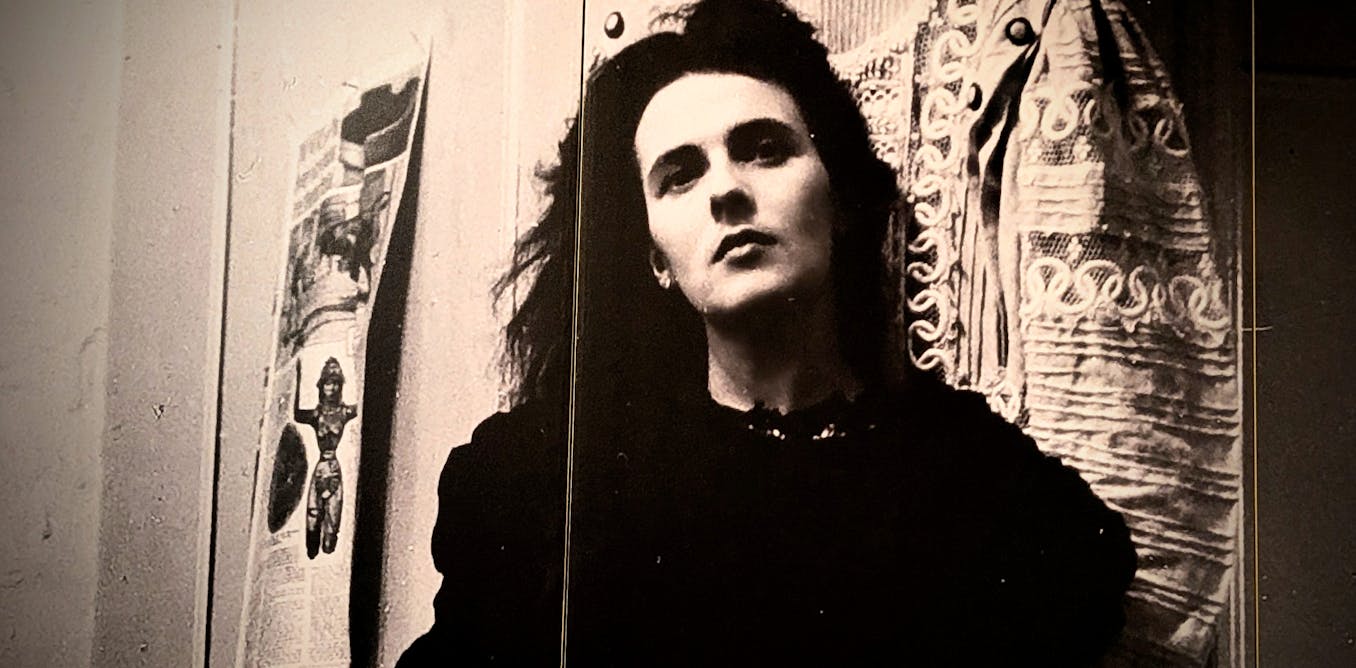
Leonora Carrington's 1940 sanatorium sketches go on public display for the first time at London's Freud Museum, in her first London show in 35 years.
Leonora Carrington’s 1940 sanatorium sketches go on public display for the first time at London’s Freud Museum, in her first London show in 35 years.
The works Leonora Carrington made during her psychiatric confinement in Spain in 1940 are going on public display for the first time. The Symptomatic Surreal, the new exhibition at London’s Freud Museum, marks the British-Mexican surrealist’s first show in the city in 35 years.
The setting is the point. The exhibition is built around the sketches Carrington made during her six-month internment at the Peña Castillo sanatorium in Santander, Spain, in the latter half of 1940.
The curator went all in on the room itself. The Conversation’s deep dive on curator Vanessa Boni’s framing of Carrington’s confinement and the room-as-cell installation notes that the gallery space sits inside the rooms once occupied by Sigmund Freud, with no natural light entering. The setup is a deliberate echo of the conditions Carrington described.
Carrington’s own words made the framing inescapable. She compared her time at Peña Castillo to “being dead,” telling biographer Marina Warner that she “entered a catatonic state” and was “no longer suffering in an ordinary human dimension.”
The clinical detail is harder to absorb. Visitors learn that Carrington was treated three times with Cardiazol, a chemical agent administered to induce seizures and produce compliance in sanatorium patients.
The trigger for her breakdown was her separation from Max Ernst. The married German surrealist, with whom Carrington had settled in Provence in the late 1930s, was arrested for a second time as an enemy alien in 1940, leaving her to flee approaching Nazi forces alone.
Carrington has long been more than Ernst’s footnote. A January 2026 essay arguing the artist was never a footnote in someone else’s life tracks how she spent decades being filed as muse, partner, or tragic figure rather than as the surrealist who built her own visual language.
She crossed into Spain through Andorra. Her grasp on reality slipped during the journey, and she suffered a complete breakdown after arriving in Madrid.
Boni’s selection ties the sketches to a broader thematic frame. A survey of Carrington’s recurring entrapment-and-escape motifs and the autobiographical thread running through them tracks how she returned to confinement imagery across decades, from the rocking-horse paintings of her youth to her later writing.
Egyptian iconography sits inside the show as well. Statuettes and figures of Anubis, Isis, Horus, and Osiris drawn from Freud’s personal collection appear alongside the sketches, knitting together the curator’s parallel argument about death as a stage of transformation in Carrington’s later Mexico-period thinking.
Carrington lived in Mexico from 1942 until her death in 2011 at age 94. The Mexico chapter is where her surrealist mythology, her novels, and her sculptural work fully crystallized.
For London audiences, the gap has been a long one. Carrington has been the subject of major exhibitions across Mexico and continental Europe over the past two decades, but the British capital has not hosted a dedicated show of her work since 1991.
That changes now. The Symptomatic Surreal is on view at the Freud Museum, with Boni’s curatorial book-end framing the sanatorium room as the place where Carrington’s later mythology began to compose itself.