Physical Address
304 North Cardinal St.
Dorchester Center, MA 02124
Physical Address
304 North Cardinal St.
Dorchester Center, MA 02124

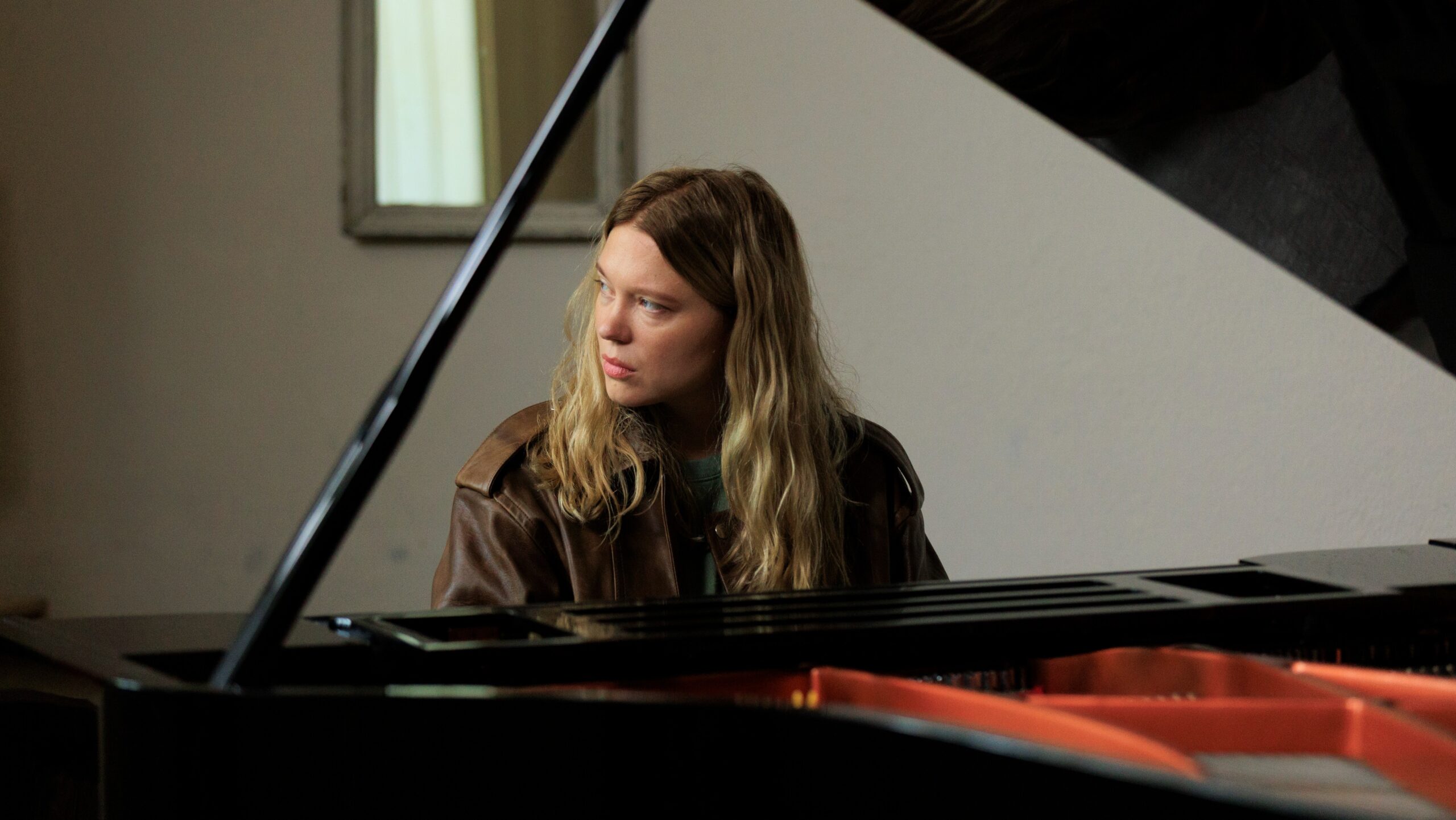
Marie Kreutzer's Gentle Monster, starring Léa Seydoux, premieres at Cannes 2026 — a domestic drama about child sex abuse told through a wife's unraveling.
Marie Kreutzer’s Palme d’Or contender takes aim at the darkest corners of domestic life, with Léa Seydoux delivering one of the festival’s early standout performances.
Gentle Monster opens with a woman at a piano. Léa Seydoux, playing Lucy Weiss, a French virtuoso musician living in Munich with her Austrian husband and young son, is picking out a stilted cover of Charles and Eddie’s neo-soul classic “Would I Lie to You?” It is, as IndieWire’s critic points out in their full review of the film, a rhetorical question that will curdle into something far more urgent over the course of the next two hours. Director Marie Kreutzer has made a film about the moment a marriage becomes a crime scene, and she has made it with the precision of someone who has been thinking about this subject for a very long time, for reasons that are both personal and professional.
The film had its world premiere at the 79th Cannes Film Festival on May 15, competing in the main competition for the Palme d’Or, and it arrived with the weight of a project that had been transformed by real events. In 2022, Kreutzer’s previous feature Corsage earned international acclaim, but the following year its male lead, Austrian actor Florian Teichtmeister, pleaded guilty to possessing more than 76,000 child sexual abuse files. Kreutzer had been informed of rumors about Teichtmeister before release and received private assurances from him that they were false. Gentle Monster, which she had begun developing before the Corsage scandal broke, examines what it looks like from the inside when those assurances turn out to be lies. It is not a film of accusation or apology. It is something harder to categorize: an unflinching study of the people left to reckon with a crime they did not commit and may not have seen coming.
In the film, the accused is Philip Weiss, played with quiet, ordinary menace by Laurence Rupp. He is a documentary filmmaker of middling success, a present and seemingly attentive father, a husband with whom Lucy shares a lively physical relationship and a comfortable, slightly chaotic house they have been too busy to fully furnish. Philip suffers a burnout and the family moves from Munich to the German countryside, to a scruffy farmhouse far too large for three people. Not long after, the police arrive with a warrant. Lucy is asked to take an elevator to the designated floor of the local station where child pornography cases are handled. What she learns there, and how she absorbs it, is the engine that drives the rest of the film. Seydoux plays every stage of that process without sentimentality and without melodrama, in what Hollywood Reporter’s Leslie Felperin describes as a performance that is steely, vulnerable, angry and broken all at once. It is, by any early measure, one of the strongest pieces of screen acting at this year’s festival.
Kreutzer structures the film around Lucy’s perspective almost entirely, a choice that pays off in moral complexity rather than narrative simplicity. The script is not interested in explaining Philip or excusing him. It is interested in Lucy: in the particular agony of loving someone whose interior life you have apparently misread for years, in the ways guilt attaches itself to the innocent, and in the social mechanics of how families, friends and institutions respond when a respectable man is accused of something unforgivable. A parallel subplot follows Jella Haase as the German investigator handling Philip’s case, a woman who is navigating her own fraught relationship with a difficult man at home. The symmetry is a little schematic, and several critics have noted it is not entirely necessary, but it reinforces the film’s central argument: that proximity to monstrous behavior does not make you a monster, even if it makes you feel like one.
Catherine Deneuve appears as Lucy’s somewhat remote French mother, Eloise, landing impact in a handful of scenes with the particular efficiency of a screen veteran who does not need much time to say something that sticks. Cinematographer Judith Kaufmann, who also shot Corsage, lights the film with a cold, textured beauty that suits its subject. The music, arranged by French singer-songwriter Camille, weaves through Lucy’s concert performances, where she delivers off-kilter interpretations of songs written or performed by men, including The Cure’s “Boys Don’t Cry” and George Michael’s “Freedom.” The choices feel thematically loaded without being heavy-handed, which is broadly true of Kreutzer’s direction throughout. She is a filmmaker who trusts her audience to feel the implications without having them spelled out.
The title itself, as IndieWire observes, is an act of narrative strategy. “Gentle Monster” deprives the viewer of Lucy’s natural doubt by naming the problem before she has arrived at it herself. Philip is already the monster of the title; the question the film actually investigates is what that makes everyone around him. For Lucy, the answer involves rage, grief, a furious protectiveness toward her son, and the particular horror of having to hold those feelings in a body that still remembers loving the man responsible. It is the kind of subject that cinema approaches rarely and usually badly. The Playlist has already tagged it the domestic drama for the Epstein era, and while the comparison is blunt, it is not wrong: this is a film about how ordinary domestic life and extraordinary moral failure coexist in the same house, sometimes for years, before anyone says anything. Kreutzer’s version of that story is sharp, controlled and genuinely difficult to shake. Whether it goes home from Cannes with a major prize or not, it has already done what the best competition films are supposed to do: made itself impossible to dismiss.