Physical Address
304 North Cardinal St.
Dorchester Center, MA 02124
Physical Address
304 North Cardinal St.
Dorchester Center, MA 02124

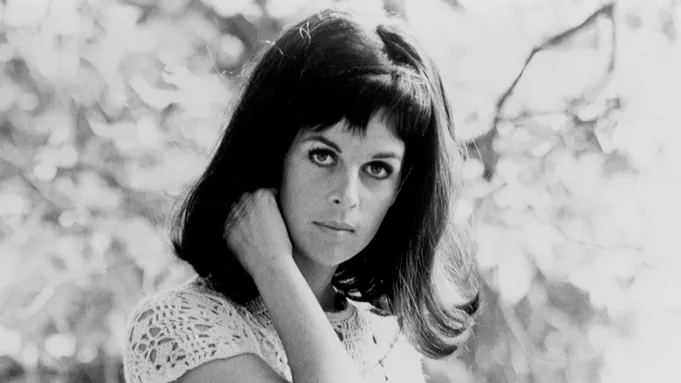
Claudine Longet, the French singer and actress famous for her Andy Williams marriage and the fatal 1976 shooting of skier Spider Sabich, has died aged 84.
The French-born singer and actress, once one of television’s most recognizable faces, spent her final decades defined by a courtroom verdict that was largely considered a miscarriage of justice.
LOS ANGELES — Claudine Longet, the French-born singer and actress who found fame on American television in the 1960s and notoriety in a Colorado courtroom a decade later, died this week at the age of 84. Her death was confirmed by her nephew, Bryan Longet, who posted a tribute on social media that, translated from French by the Los Angeles Times, read in part: “You have been a true inspiration in my life and you will always be. Another star in the sky.” For a woman who had agreed, as part of a civil settlement, to never speak publicly about the most infamous chapter of her life, the silence she kept for nearly five decades said everything and nothing at once.
Born in Paris on January 29, 1942, Longet showed an early aptitude for performance and made her stage debut at age 10 in a production of “The Turn of the Screw.” Television work followed in France, and it was on French television that American impresario Lou Walters, father of broadcast journalist Barbara Walters, spotted the teenage dancer in 1960 and hired her to join the Tropicana casino’s Folies Bergère revue in Las Vegas. She was 18, spoke little English, and had never been to the United States. She moved anyway.
The story of how Longet met Andy Williams has the quality of a studio publicist’s dream. Her car broke down on the side of a Las Vegas highway, and Williams, then already an established entertainer, happened to be passing and stopped to help. They were married on Christmas Day 1961 and quickly became one of American entertainment’s most visible couples. The following year, Williams released “Moon River” and his career accelerated into a different stratosphere. The couple relocated to an oceanfront mansion in Malibu and had three children: Noelle, Christian, and Robert, known as Bobby, named after their close friend Robert F. Kennedy.
Longet became a fixture on “The Andy Williams Show,” the NBC variety program that ran through much of the 1960s, and the family’s Christmas television specials drew enormous ratings. Her singing career developed independently of her husband’s celebrity. She signed with A&M Records and released seven studio albums between 1967 and 1972, her debut record, simply titled “Claudine,” selling more than a million copies. Her most enduring screen moment came in director Blake Edwards‘s 1968 comedy “The Party,” in which she played an aspiring actress opposite Peter Sellers and delivered a performance of Henry Mancini and Don Black’s “Nothing to Lose” that film critics still cite as a highlight of the film. She and Williams divorced in 1975, according to Variety’s full account of her life and career, after which Longet and her children moved to Aspen, Colorado, to live with her new boyfriend.
Longet had first met Olympic downhill skier Vladimir “Spider” Sabich in 1972 at a celebrity skiing exhibition in Bear Valley, California. By the time she moved into his Colorado home, they had been together for several years. On March 21, 1976, Longet shot Sabich in his bathroom with a .22-caliber pistol that had been purchased by his father. She told investigators the gun had discharged accidentally while Sabich was showing her how it worked. He died from his wound on the way to the hospital. She was charged with reckless manslaughter and faced up to ten years in prison.
The trial that followed became one of the more scrutinized celebrity court proceedings of the decade, not because of any particularly dramatic testimony but because of its outcome. The prosecution’s case was undermined by mishandled evidence and conduct that the court found constituted an illegal search. The jury convicted Longet not of manslaughter but of criminally negligent homicide, a misdemeanor. Her sentence, handed down in January 1977, was two years of probation, a $250 fine, and 30 days in jail. The Sabich family filed a civil lawsuit seeking $1.3 million. The case settled out of court, with Longet agreeing never to speak publicly about Sabich or his death, a condition she appears to have honored until her own death nearly fifty years later.
She spent those decades in Aspen, largely out of the public eye, living with her attorney Ron Austin, who had represented her during the criminal trial and whom she later married. The entertainment world she had once inhabited moved on. Her albums went out of print. Her television appearances became archival curiosities. What remained in the popular memory was the trial, the sentence, and the question of whether the legal system had treated her differently because of who she was. It is not a question anyone could answer for her now.