Physical Address
304 North Cardinal St.
Dorchester Center, MA 02124
Physical Address
304 North Cardinal St.
Dorchester Center, MA 02124

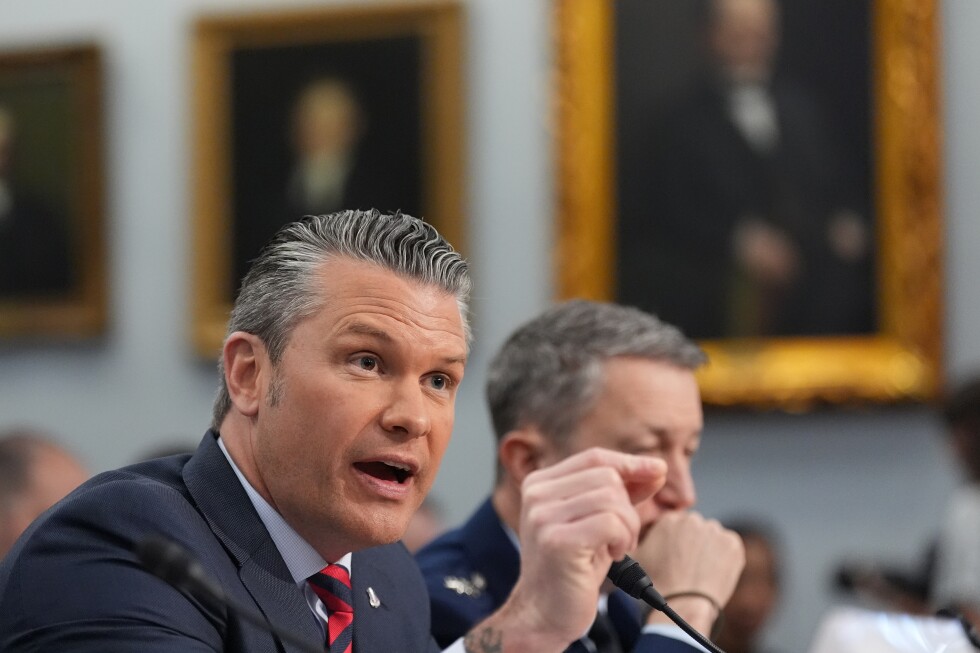
The Pentagon canceled U.S. troop deployments to Poland and Germany, executing Trump's order to cut 5,000 forces from Europe amid growing NATO tensions.
The Pentagon is reducing its military footprint in Europe by canceling scheduled deployments rather than withdrawing forces already on the ground, multiple U.S. officials confirmed this week, as President Donald Trump presses ahead with a directive to cut approximately 5,000 American troops from the continent. The move has caught European allies off guard and intensified an already strained transatlantic relationship, with both Warsaw and Washington raising sharp questions about the scope and logic of the reductions.
At the center of the decision is the cancellation of a deployment by the Army’s 2nd Armored Brigade Combat Team, 1st Cavalry Division — roughly 4,000 soldiers based at Fort Hood, Texas — that had been expected to rotate into Poland this week. Separately, an upcoming deployment to Germany of a battalion specializing in long-range rockets and missiles was also halted. Both cancellations stem from a memo signed by Defense Secretary Pete Hegseth directing the Joint Chiefs of Staff to move a brigade combat team out of Europe, according to the Associated Press, which cited multiple officials speaking anonymously to discuss sensitive military planning.
The troop reductions trace back to a presidential order issued at the start of May instructing the Defense Department to bring down U.S. force levels in Europe by roughly 5,000. The Trump administration had initially framed the cuts as limited to Germany — a position that made the Poland cancellation all the more surprising to allies and to some military personnel already stationed in Europe, several of whom told reporters they were unaware that the Polish deployment had been folded into the broader drawdown. The lack of clear internal communication has added a layer of confusion to what is already a politically charged decision, as reported by KCRA.
The timing is particularly sensitive. Trump has spent recent weeks at odds with European leaders over the ongoing war in Iran, and German Chancellor Friedrich Merz publicly said the United States was being “humiliated” by Iranian leadership and criticized what he called a vacuum of American strategic thinking. The U.S. decision to pull back from Germany was partly framed as a response to that criticism — a signal that American military presence in Europe is no longer unconditional. Whether the same framing applies to Poland, a country that has increased its own defense spending significantly and positioned itself as one of NATO’s most committed eastern flank members, remains unclear.
Poland has invested heavily in its relationship with American forces in recent years, hosting rotational U.S. troops and constructing infrastructure specifically intended to support NATO’s eastern deterrence posture. The cancellation of the armored brigade deployment — without apparent prior coordination with Warsaw — has raised serious questions about the reliability of American security commitments in the region. Polish officials have pushed back sharply, and the episode has fueled a wider debate in European capitals about whether the continent can count on U.S. military support at a moment of genuine regional insecurity, according to reporting from the Associated Press via Yahoo News.
The drawdown also comes as NATO allies are navigating an already complicated set of pressures — Russian aggression on Ukraine’s border, instability further south, and an American administration that has repeatedly signaled it expects European nations to shoulder a greater share of collective defense costs. Canceling a rotation of armored troops to Poland, the alliance’s most exposed eastern member, sends a message that goes beyond budget arithmetic. It raises a fundamental question about the architecture of deterrence that has underpinned European security since the end of the Cold War.
The immediate practical question is whether the canceled deployments will be rescheduled or whether they represent a permanent recalibration of the U.S. military presence in Europe. Pentagon officials have not said publicly how or when the 5,000-troop reduction will be complete, or which additional units may face similar cancellations. Meanwhile, the decision is likely to accelerate conversations within NATO about European strategic autonomy — and whether the alliance’s eastern members, Poland chief among them, need to accelerate plans to fill gaps that American forces once occupied. For the Trump administration, the pullback reflects a consistent foreign policy instinct: that decades-old alliance commitments should be renegotiated on American terms, whatever the short-term cost to allied confidence.