Physical Address
304 North Cardinal St.
Dorchester Center, MA 02124
Physical Address
304 North Cardinal St.
Dorchester Center, MA 02124


More than 1,000 fans were already in line at 7 a.m. Friday for a merch sale — the first show isn't until Saturday. BTS's long-awaited US return is officially here.
Fans camped out Thursday night for a Friday merch sale. The concerts don’t start until Saturday. Welcome back, BTS.
SAN FRANCISCO — There was no show Friday night at Stanford Stadium. The first of three sold-out concerts on BTS‘s ARIRANG World Tour doesn’t kick off until Saturday. That didn’t stop more than a thousand devoted members of the BTS Army from forming a line that, by 7 a.m. Friday morning, had already wrapped around the stadium’s track field multiple times — all of them there for a merch sale that didn’t open until 10 a.m. One fan who spoke to NBC Bay Area outside the gates had already spent $700 on merchandise before the actual concerts had begun, a figure she offered alongside the $800 she’d paid for her VIP ticket. The math isn’t for everyone. But for the BTS Army, it makes perfect sense.
Roughly 150,000 fans are expected to pass through Stanford Stadium across the three-night run — a number that surpasses the attendance from Taylor Swift’s two-night Eras Tour run at Levi’s Stadium in 2023, which drew approximately 116,000 Swifties. The Bay Area airport got the memo early: San Francisco International Airport rolled out a dedicated welcome station dressed in BTS’s signature purple, a gesture that simultaneously functions as fan service and a quietly staggering statement about the economic footprint a K-pop world tour carries into whatever city it touches down in.
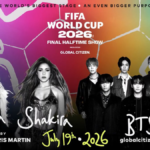
BTS last performed in the United States during a run of shows in Las Vegas in 2022. What followed was not a hiatus in the traditional pop music sense — a creative sabbatical or a carefully engineered absence designed to reset public appetite. It was mandatory. South Korean law requires male citizens to complete military service, and the members of BTS, one by one, reported for duty. The group that had sold out stadiums on multiple continents and was later tapped to perform at the 2026 FIFA World Cup final halftime show spent much of the intervening years in military fatigues rather than stage costumes.
Their return to live performance began on March 21, 2026, at Gwanghwamun Square in central Seoul — a free outdoor concert that served as both a homecoming and a declaration that the hiatus was over. The footage from that night circulated globally within hours, arriving at a moment when BTS had already begun re-entering the cultural conversation in unexpected ways. The group’s new album, ARIRANG, had quietly set a 2026 single-day streaming record on Spotify before Drake broke it within weeks — and then, almost immediately, name-dropped the group on his own record-setting release, a lyrical wink that BTS members V and J-Hope acknowledged in real time. The world, it turned out, had been paying attention the whole time they were away.
Putting 150,000 people through a stadium over three nights is a logistical undertaking that requires a city to reorganize itself slightly. The Bay Area has done this before — Dead & Company‘s three-day run at Golden Gate Park drew an estimated 180,000 over the same span, a benchmark that still stands as the regional high-water mark for multi-night concert attendance. BTS won’t clear it, at least not on this stop. But the nature of the crowd, its geographic reach and its organizational cohesion, sets these shows apart from even the most beloved legacy acts. The BTS Army is not a passive fanbase that shows up and watches — it coordinates, documents, fundraises, and mobilizes with a discipline that event organizers have described, sometimes with barely concealed awe, as unlike anything else in the industry.
The Stanford stop is part of a broader North American leg that has sold out across multiple cities, the group’s first extended US touring since the Las Vegas run. Local broadcast outlets began coverage days in advance, noting the logistical preparations underway around the venue and the early arrival of fans from across the country and beyond. The question most people outside the BTS Army seemed to be asking — how long can this level of intensity possibly sustain? — has been asked, and answered, roughly once a year for the better part of a decade. The answer, as of 7 a.m. Friday outside Stanford Stadium, remains the same: longer than you think.